Fire Triangle
The fire triangle is the picture used to illustrate the conditions A permit is needed when maintenance work can only be carried out if normal safeguards are dropped or when new hazards are introduced by the work. Examples are, entry into vessels, hot work and pipeline breaking. which must prevail in order that combustion may take place. Each side of the triangle represents one of the essential ingredients and all three must co-exist in order to support combustion.
The ingredients are:
- Fuel: This can be in the form of gas, vapour, mist or dust.
- Oxidizer (air): An oxidizer is a type of chemical which a fuel requires to burn. Most types of burning on Earth use oxygen or air, which is prevalent in the atmosphere. There is approximately 21% oxygen by volume in air.
- Source of ignition: This can be an arc, spark, naked flame or even a hot surface.
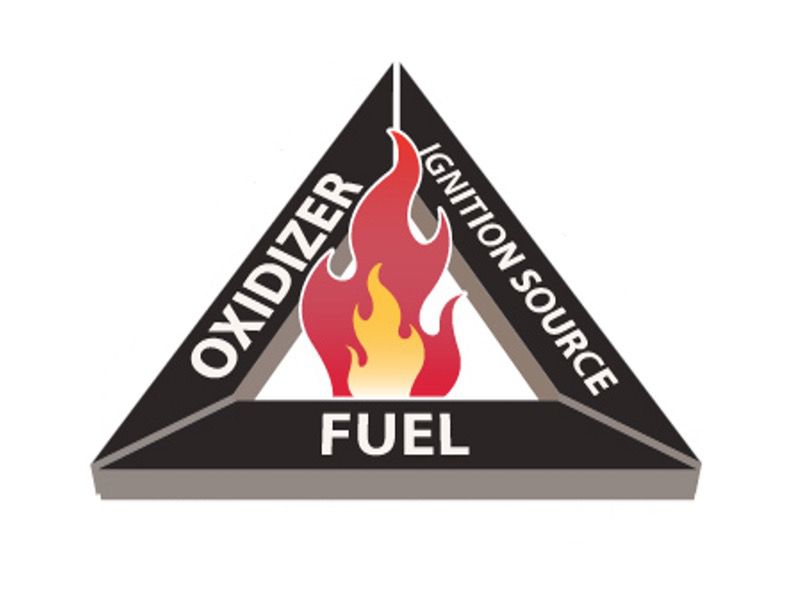
Combustion will take place if all three ingredients, in one form or another, are all present and, providing the gas/air mixture is within certain limits and the source of ignition has sufficient energy. The removal of only one of those ingredients is sufficient to prevent combustion. Sources of ignition are many and varied and include:
- electrical arcs/sparks
- frictional sparks
- static
- hot surfaces in general
- Naked Flames
- lightning strikes
Types of surface Gases
Hydrogen – Acetylene - Carbon Disulphide - Dibutyl ether - Ethylene - Hydrogen sulphide – Acetone – Ammonia – Benzene – Cyclohexane – Ethane – Gasoline – Hexane – Kerosene – Methane – Propane – Toluene - Xylene